Article 10 in the Got Real Milk Series
What Are Human Milk Oligosaccharides?
Human milk oligosaccharides, HMOs, are special carbohydrates found naturally in breast milk. They don’t feed the baby directly; they feed the infant’s gut bacteria, helping to shape early immunity, digestion, and brain development.
More than 200 different HMOs exist in human milk, varying from mother to mother and even changing during lactation. Formula companies in their attempts to mimic breast milk now add a few lab‑made copies such as 2’-fucosyllactose (2’-FL) and lacto‑N‑tetraose (LNT).
How Industry Makes “Synthetic” HMOs
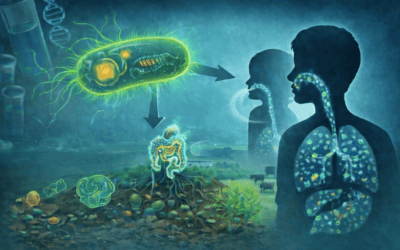
Because HMOs occur in tiny natural quantities, industry doesn’t extract them from milk. They manufacture them using precision fermentation:
- Scientists insert human gene sequences for specific enzymes into microbes like E. coli K‑12 or yeast.
- These genetically modified organisms (GMOs) are bred in industrial fermenters.
- The microbes synthesize the target oligosaccharide, which is then filtered and purified.
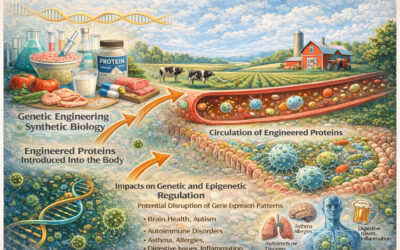
The final white powder may be chemically identical to the natural molecule, but the means of production is entirely GMO‑based. Regulators classify it as “bio‑identical,” not as a “GMO ingredient.” Thus, most parents never know the ingredient was created inside a genetically engineered organism.
Why It Matters
For a newborn’s developing system, subtle biochemical alterations matter. While synthetic HMOs do appear safe in short‑term studies, several concerns remain:
- Transparency: Labels rarely disclose GMO fermentation origins.
- Complexity gap: Breast milk delivers hundreds of HMOs plus immune cells, antibodies, and hormones; formulas offer a handful of isolated copies.
- Manufacturing residues: Even when microbes are removed, trace by‑products or endotoxins can persist if purification isn’t perfect.
- Ecological footprint: Industrial bio‑fermentation depends on patented GM strains, energy‑intensive sterilization, and large‑scale waste streams.
For families seeking truly non‑GMO infant nutrition, these distinctions matter deeply.
Formulas Containing GMO‑Derived HMOs
Brand / Company | Formulas | Details |
Abbott (Similac) | Similac 360 Total Care, Similac Pro‑Advance, Similac Pro‑Sensitive | Contain 2′‑FL and / or LNnT made by recombinant E. coli K‑12; supplied by DuPont (Danisco) and DSM Glycom. |
Nestlé (Gerber / NAN) | Gerber Good Start GentlePro, Gerber Good Start Extensive HA, NAN Supreme Pro | Use DSM Glycom HMOs via GMO fermentation; marketed as “human‑identical.” |
Danone (Aptamil / Nutricia) | Aptamil Gold+, Nutrilon, Almiron Prosyneo | Include 2′‑FL + LNnT produced by engineered E. coli in DSM bioreactors. |
Reckitt | Enfamil NeuroPro, Enspire, Gentlease DI, Enfamil Enspire Optimum | Use 2′‑FL from GMO microbial fermentation. |
Else Nutrition | Plant‑Based Infant Formula, Toddler Omega lines | Adds synthetic 2′‑FL made with genetically modified microbes to mimic human milk. |
Hero Baby / Biostime / Feihe (Premium EU & China) | Various advanced SKUs | Source HMOs from DSM, DuPont or BASF industrial fermentation platforms (GM E. coli or yeast). |
Formulas Free from GMO‑Derived HMOs
Brand | GMO Status / Notes |
Kendamil (UK) | Full‑cream, grass‑fed milk; uses natural lactose only; 100% non‑GMO |
Holle (Switzerland) | EU organic; uses GOS prebiotics (enzyme‑derived, not GMO) |
Lebenswert Bio / HiPP Organic | Non‑GMO; some HiPP “COMBIOTIC plus HMO” SKUs contain GMO‑derived 2’-FL, but others do not |
Bubs Australia | Cow & goat milk formulas; natural GOS/FOS prebiotics, no synthetic HMOs |
The Bigger Picture
The companies promoting “next‑gen” HMOs claim they are “human‑identical” and therefore natural. But that’s like saying a diamond made in a pressure chamber is “identical” to one grown in the Earth. The structure may match, but the process, the ecology, and the accompanying molecules are profoundly different.
Once again, the public is being denied full transparency. Parents deserve to know if their baby’s formula ingredients originated from genetically engineered microbes just as they’d want to know if those cells made insulin, cheese enzymes, or meat substitutes.
For Our Most Vulnerable
Infants are our most innocent test subjects. If we are going to re‑engineer the building blocks of their first food, the burden of proof must be extraordinarily high, and the parents must be informed.
Transparency isn’t anti‑science: it is real science, grounded in accountability. Parents must be included in the conversation regarding their own children.
Summary
- All major HMOs used in modern formulas → GMO origin via microbial fermentation.
- Organic formulas without HMOs → generally non‑
- Labels rarely state if their product contains GMOs.
- Parents seeking truly GMO‑free nutrition must scrutinize ingredient lists and choose organic heritage brands.
For citations, GMOScience.org recommends referencing corporate technical sheets (DSM Glycom, DuPont/Danisco), EFSA evaluations of 2’-FL and LNnT, and peer‑reviewed analyses of synthetic HMO production systems.
For more information on this germane information for parents, my newest book, “Making Our Children Well: A Guidebook for Parents on Nutrition and Homeopathy,” will be released April 1, 2026.